
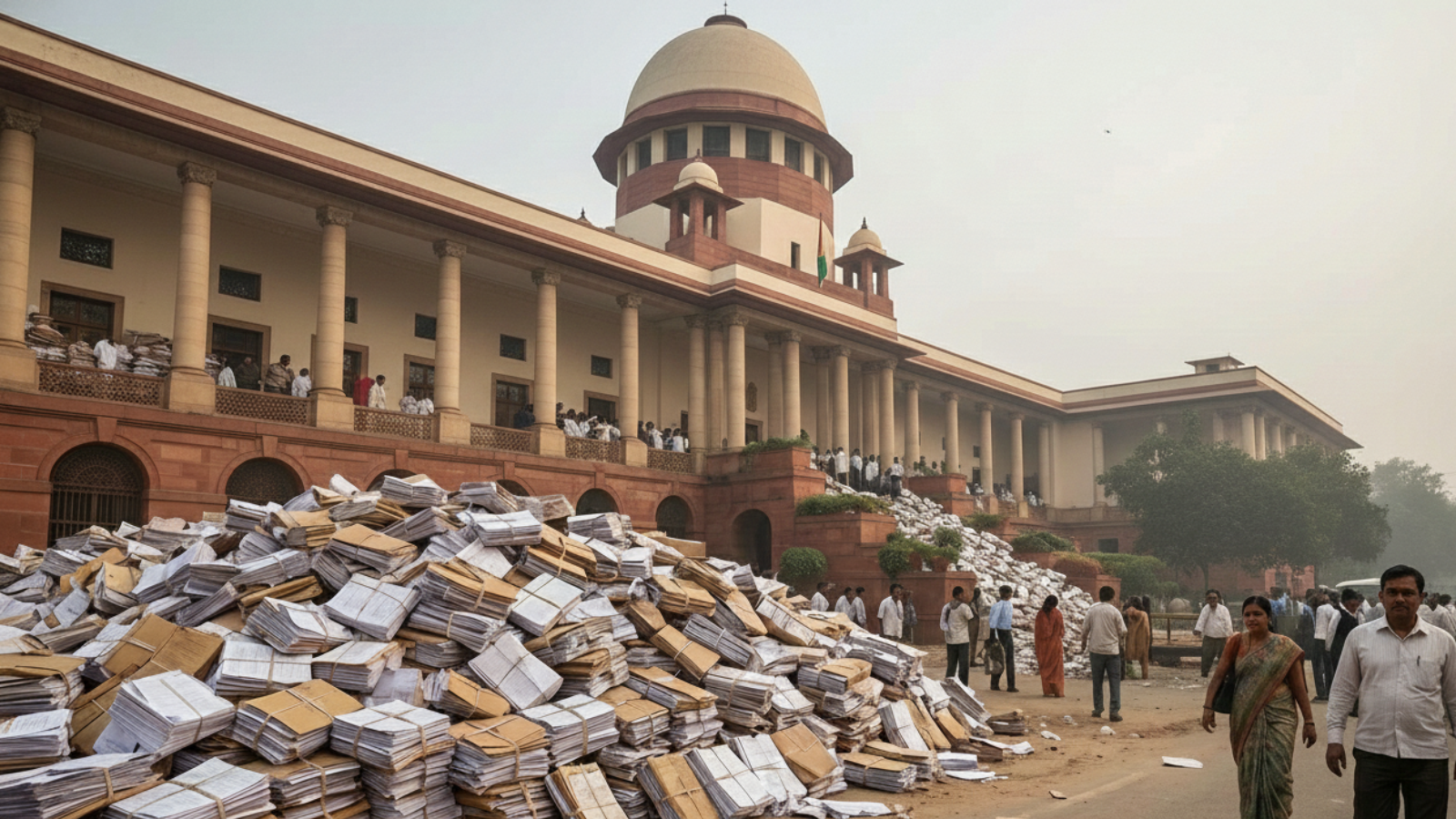
India’s judicial system is grappling with an overwhelming backlog of 50 million case pendency crisis in India, with more than 5 crore cases filling the court dockets from district courts to the Supreme Court. The phrase “justice delayed is justice denied” resonates in India, as the average time for case resolution spans 3 to 10 years, diminishing public confidence. Addressing the issue of India’s 50 million case backlog requires actionable solutions that go beyond mere talk.
Causes of 50 million case pendency in India
The root causes of case pendency crisis in India are persistent shortages of judges, frequent adjournments, and legal strategies that involve filing endless applications. The district court pendency in India accounts for 80% of the total, with approximately 4 crore cases pending; High Courts contribute an additional 60 lakh cases. Factors such as court vacations, strikes, and inadequate infrastructure further exacerbate the situation, resulting in 50 million pending cases across India’s courts.
Repercussions of Delayed Justice on Citizens
The consequences of 50 million case pendency in India have disastrous effects: a majority of prisoners (75%) remain incarcerated awaiting trial, indebted farmers are forced to forfeit their land, and families spend decades waiting for divorce settlements. The economic cost of judicial delays in India surpasses 2% of the GDP each year due to decreased productivity. Justice delayed is justice denied, as emphasized by Supreme Court judgments that reveal a systemic failure affecting the most vulnerable citizens.
Government Initiatives to Decrease Case Backlogs
Over 5,000 fast track courts for case pendency in India have been established to address case backlogs, focusing on POCSO and NDPS cases; the third phase of the e-courts project utilizes AI to digitize 30 million cases. The NJDG portal serves as a real-time tracker for case backlogs; mediation under Section 89 of the CPC resolves 2 million disputes each year. However, the Arrears Committee recommendations in India are only partially implemented.
Practical Tips to Fight Justice Delayed in Indian Courts
- Pursue only strong cases to avoid overwhelming courts with unsubstantiated litigation in India.
- Advocate for pre-litigation mediation, guided by experienced lawyers, to resolve 2 million disputes each year in India.
- Excel in time-sensitive advocacy: presentations should be concise, lasting no more than five minutes, with a limit of three adjournments.
- Utilize a real-time case pendency dashboard for lawyers in India on the NJDG for strategic case mentions.
- Guide junior lawyers with insights on reducing their contribution to case pendency in India through effective drafting practices.
These implementable strategies for lawyers aim to naturally foster systemic changes to reduce judicial backlog in India.
You May Also Like

-
May 10, 2026
ABSTRACT: The persistent conflict between hate speech and freedom of speech is not new. Freedom of speech is the cornerstone of...

-
Mar 27, 2026
ABSTRACT This article examines the life of Shri Ram as a paradigm of ethical governance, Rajdharma, and constitutional morality. It...

-
Mar 17, 2026
Most Law Students Want to Work in Corporate Law. But Very Few Know What Corporate Lawyers Actually Do. Every year,...

-
Mar 16, 2026
I first heard the Latin phrase “volenti non fit injuria” in my Tort Law class, and honestly, it sounded intimidating....
Get in touch
Call us
+91 7309 606 226
info@advokit.co.in
Address
1, Sapru Marg, 2nd floor above Mr Brown, Hazratganj, Lucknow, Uttar Pradesh - 226001